Materials & sleep
How to Choose a Non-Toxic Body Pillow: Wool, Latex, and Care Considerations
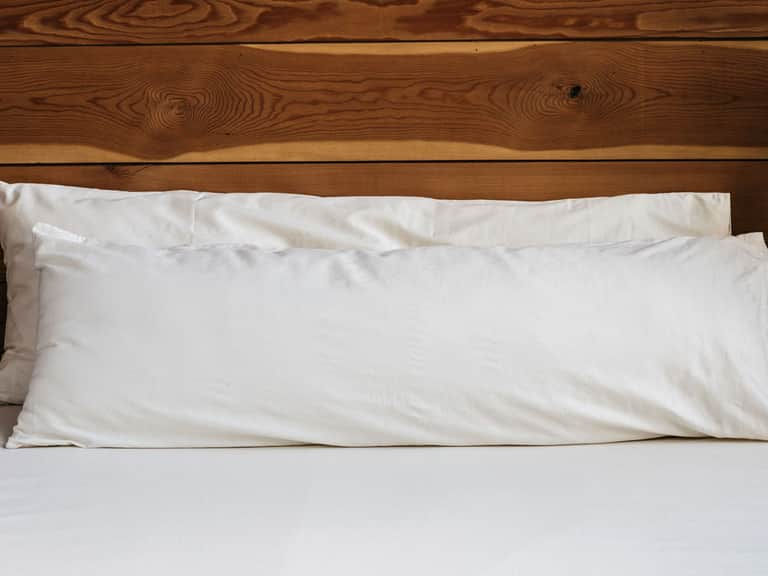
A body pillow can be a quiet luxury or a nightly essential: something to tuck between the knees, cradle against the torso, or arrange into the shape that makes rest feel easier. The right choice begins not with sweeping promises about what a pillow can do, but with its materials, construction, dimensions, and the care it will need over time.
Published October 20, 2026
“Non-toxic” is an appealing phrase, but it is not a universal certification or a guarantee that a product will suit every sleeper. A more useful approach is to look closely at what the body pillow is made of and how those materials are documented. Wool and latex have distinct textures and support characteristics; organic cotton is a common choice for covers; and certifications, when applicable, can help clarify which parts of a product have been assessed.
That scrutiny matters because a pillow is not a single material. It is a construction: a fill enclosed in a shell, sometimes with a removable outer case, and shaped to particular dimensions. A natural fill may appeal for its origin or feel, but comfort, allergy considerations, cleaning, and fit remain personal. Understanding those details can turn a broad search for an organic body pillow into a more confident, practical decision.
Start with what you want the pillow to do
Body pillows are often chosen by side sleepers and people who want support while resting in a side-lying position. The long shape can give the arms and legs something to rest against, and some sleepers find it comfortable to place a pillow between their knees. During pregnancy, preferences may change as the body changes; a full-length pillow or a smaller “buddy” shape may feel useful at different points. These are comfort considerations, not a promise of medical benefit.
Before comparing fibers, consider the role the pillow will play in your routine. Will it sit beside you all night, or be repositioned frequently? Do you want a long, substantial pillow to hug, or a compact support that takes up less bed space? Will you use it under your legs, against your back, or between your knees? These questions guide the dimensions, firmness, and fill weight that are likely to feel appropriate.
Dimensions deserve more attention than a product name alone suggests. “Body pillow” can describe a range of lengths and widths, while smaller companion pillows may be marketed as buddies or neck rolls. Check the listed measurements against your height, mattress size, and preferred sleeping position. A pillow that is too short may not provide the coverage you expect; one that is unusually bulky can crowd a smaller bed or make it harder to change positions.
Wool: breathable, substantial, and specific about care
A wool body pillow typically has a soft, yielding feel with a degree of structure. Wool fill can compress under pressure and rebound to some extent, although the experience depends on the amount of fill, the way it is packed, and the fabric shell. People who prefer a less springy feel than latex may find wool appealing. Others may prefer a firmer, more responsive material. When possible, evaluate the fill weight and construction rather than assuming all wool pillows feel alike.
Wool can also appeal to sleepers who want a natural fiber fill. Yet natural does not mean universally suitable. People with a wool sensitivity, fragrance sensitivity, or other material concerns should review the product details and consider their own history. Some wool products may carry a mild natural scent when new. If scent is a concern, ask about processing and ventilation, and check the seller’s return policy before choosing.
Care is an important part of the wool equation. Many wool body pillows are spot-clean only rather than machine washable. That instruction is not a minor footnote: it affects how a pillow fits into a household’s laundry habits. A washable, removable pillowcase can make routine upkeep simpler, but it does not mean the inner pillow can be washed in the same way. Follow the maker’s directions, avoid soaking a fill that is not designed for immersion, and allow cleaned materials to dry thoroughly.
For a concrete example of how specifications can help, the Certified Organic Body Pillows listing describes a cotton outer fabric and GOTS-certified organic wool fill. It gives measurements and fill weights for two formats: a 17-by-53-inch body pillow with 4.5 pounds of wool, and a smaller 9-by-42-inch Buddy with 2.6 pounds. Its care guidance specifies spot cleaning the pillow and washing the separate pillowcase in cold water. These details make it easier to assess whether the size, construction, and maintenance routine match your needs.
Latex: buoyant support and a different kind of spring
Latex has a more resilient, springy character than many loose natural fills. Depending on its form and construction, it can feel buoyant and responsive, with less of the soft, compressible sensation associated with wool. Shredded latex and a solid latex core are not interchangeable: shredded fill can move within its shell, while a molded core tends to have a more consistent shape. A body pillow’s dimensions, fill quantity, and casing influence how that material feels in use.
Latex may be worth considering if you like a pillow that pushes back rather than simply settling beneath your weight. It can also be comparatively heavy, so think about whether you will move or reposition it often. Some latex pillows are spot-clean only, and the fill should not be treated as though it were ordinary washable bedding. Covers and pillowcases provide a practical layer between the fill and everyday use, but the specific care instructions still govern.
People with a latex allergy or a history of reactions should take particular care when considering latex-containing bedding. Product descriptions should identify whether the fill is latex, but questions about exposure, material handling, or suitability are best discussed with a qualified healthcare professional when allergy risk is known. Certification of material or production does not establish that an item is appropriate for every individual.
When comparing latex products, look for whether the fill is solid or shredded, what type of latex is described, and whether the claim applies to the fill itself or the complete pillow. The Naturally Organic Hudson Shredded Latex Pillow, for example, is a conventional sleeping pillow rather than a full-length body pillow, but its description illustrates the value of specific construction details: it identifies shredded Dunlop latex and a GOTS-certified organic cotton cover, and states that the pillow is spot-clean only. It should not be mistaken for a body pillow; the point is that material and care information should be read precisely, not inferred from a “natural” label.
Organic cotton covers: a useful detail, not the whole story
An organic cotton pillow cover can be a comfortable, breathable-feeling surface, and it gives buyers a specific fabric to evaluate. But “organic cotton cover” describes the cover, not automatically the fill, thread, dyeing, or every other component. A pillow made with an organic cotton shell may still contain a different material inside. Read the complete materials list and look for clear descriptions of each layer.
Also distinguish between a sewn-in shell and a removable cover. A removable case is easier to launder regularly, while an inner casing may remain spot-clean only. Some pillows require a separate pillowcase, and using one can help protect the product from body oils, perspiration, and routine soil. Before buying, confirm whether a case is included, whether standard body-pillow cases will fit, and what washing method is recommended.
Fabric feel matters as much as fiber origin. Cotton sateen, percale, and canvas can have notably different textures and weights. Consider whether you prefer a smooth finish or a sturdier hand, and whether the fabric is likely to feel comfortable against your skin throughout the night. A well-described cover is a practical advantage; it is not, by itself, proof of a particular health outcome.
How to read pillow certifications
Certifications can make a materials claim more transparent, but their meaning depends on the standard, the product component covered, and the validity of the documentation. GOTS, the Global Organic Textile Standard, relates to organic textiles and sets criteria across processing and supply-chain stages. GOLS, the Global Organic Latex Standard, applies to organic latex and its processing chain. They are not interchangeable, and neither should be treated as a blanket certification for every part of a pillow unless the documentation says so.
Look for the name of the certifying standard, the material it applies to, and whether the claim is tied to the finished product or a particular component. A certified cotton cover does not automatically establish that the fill is certified; likewise, a certified latex fill does not automatically certify a separate case. If a product page uses broad language such as “all organic,” seek the detailed specifications or ask the manufacturer what is included.
Certification is useful evidence about defined criteria; it is not a universal synonym for “chemical-free,” “hypoallergenic,” or “safe for everyone.” Those broader phrases can conceal important distinctions. A measured, product-specific claim is more informative than an absolute one. When documentation is unclear, a request for current certification details is reasonable.
A practical checklist before you buy
- Identify every material. Check the fill, inner shell, outer cover, and any included case separately.
- Compare dimensions and fill weight. These help describe scale and substance more clearly than a product name alone.
- Choose a feel. Wool often feels yielding and substantial; latex tends to feel more resilient. Construction can change either experience.
- Review the care label. Note whether the pillow is spot-clean only and whether a separate cover can be machine washed.
- Check certification scope. Confirm which components are certified and what standard is named.
- Consider sensitivities. Review latex, wool, dyes, and other materials in light of your own known allergies or concerns.
- Ask about a pillowcase. Confirm whether one is included and whether replacement cases are available in the correct size.
- Understand the return terms. Feel and loft are personal; a clear return policy can matter when you cannot assess a pillow in advance.
Care that protects the pillow—and your investment
Care begins with prevention. A washable, properly sized pillowcase creates a barrier against everyday soil and can be changed as often as your usual bedding. Follow the temperature and drying directions on the case, since high heat or unsuitable washing can affect fabric shape and texture. If the inner pillow is spot-clean only, avoid putting it in a washer simply because its cover can be laundered separately.
For a small spill, follow the manufacturer’s instructions and test any cleaning method discreetly where possible. Use only the recommended approach, avoid saturating the fill, and allow the pillow to dry completely before putting it back into use. Moisture left inside a dense pillow can be difficult to detect. Do not expose materials to direct heat or harsh sunlight unless the care instructions explicitly permit it; heat and light can affect some fibers and fillings.
Regularly inspect seams, closures, and the condition of the cover. A damaged seam can allow fill to escape or shift. Fluff or reshape the pillow only in the manner recommended for its construction; a loose-fill pillow and a solid latex core do not call for the same handling. Keep the product’s care details somewhere accessible, especially if the pillow is spot-clean only and several people share household laundry duties.
The right choice is the one whose details add up
There is no universally best material for a body pillow. Wool may suit someone who likes a softer, more yielding support and accepts careful cleaning. Latex may appeal to a sleeper seeking a more buoyant feel, provided latex is suitable for them and the weight and care routine are manageable. An organic cotton cover can be a welcome fabric choice, but it should be considered alongside the fill, construction, and certification information—not as a substitute for them.
Ultimately, a considered purchase is less about finding a perfect-sounding label and more about aligning the product with your preferences. Measure the space, compare fill and cover materials, understand what certifications actually cover, and decide whether the maintenance requirements fit your life. A clear description of dimensions, fill weight, and care is often more revealing than a sweeping promise. With those particulars in view, choosing an organic body pillow becomes a grounded decision about comfort, construction, and everyday use.
This article is for general educational purposes. It does not assess individual medical needs or replace advice from a qualified healthcare professional. Always follow the care instructions supplied with a specific pillow.