Practice & Materials
Yoga Bolsters Explained: How Cotton Batting and Kapok Shape Restorative Support
In restorative yoga, the most elegant support is often the one that lets the body stop trying so hard. A bolster can make a pose feel more spacious and settled, but its filling, dimensions, and cover determine whether that support feels yielding, buoyant, or distinctly firm.
A bolster is a compact study in comfort. Placed beneath the knees, along the spine, or under the chest, it changes the relationship between the body and the floor without asking the body to perform. In a quiet practice, that small shift can make a shape feel more accessible, allowing muscles to soften while the bolster takes some of the work of holding a position.
For anyone considering a foam-free bolster, cotton batting and kapok offer an appealing alternative to synthetic foam. Both are plant-derived filling materials, but they do not create exactly the same sensation. Their combination can produce a surface that feels substantial without being rigid, cushioned without collapsing immediately beneath pressure. The details matter: the proportions of each fiber, how the filling is packed, the shape of the bolster, and whether its cover can be removed all influence how it performs in everyday practice.
This is not a matter of discovering one universally perfect fill. A bolster that feels wonderfully supportive in a seated pose may feel too tall beneath the back; a soft, compressible cushion may feel comforting at first yet offer less stability over a longer hold. The best choice depends on the body, the pose, and the kind of practice being cultivated at home.
What a yoga bolster is meant to do
A yoga bolster is a firm cushion designed to support the body in resting or gently held postures. It is usually longer and more structured than a bed pillow, with a shape that distributes weight across a broader area. Bolsters are commonly used in restorative yoga, gentle stretching, breathwork, and other low-intensity practices. Their purpose is not to force a deeper stretch. Rather, the right placement can reduce the effort needed to remain comfortably supported.
Consider a supported forward fold: a bolster placed beneath the torso can offer a surface to rest against, instead of leaving the upper body suspended. In a reclined pose, a bolster along the spine can elevate the chest and create a gradual opening through the front of the body. Under the knees, it may reduce the sensation of strain in the lower back for some practitioners. Each setup should feel easy to exit and free of sharp pressure, numbness, or pain.
Props are adaptable, not prescriptive. A bolster may be used lengthwise, crosswise, or at an angle, and folded blankets can alter its height. Small adjustments often make more difference than seeking an especially elaborate pose. If a setup causes discomfort, change the placement or come out of the position. People with injuries, persistent pain, pregnancy-related concerns, or other health questions should seek guidance from an appropriately qualified professional before beginning a new practice.
Cotton batting: a grounded, familiar cushion
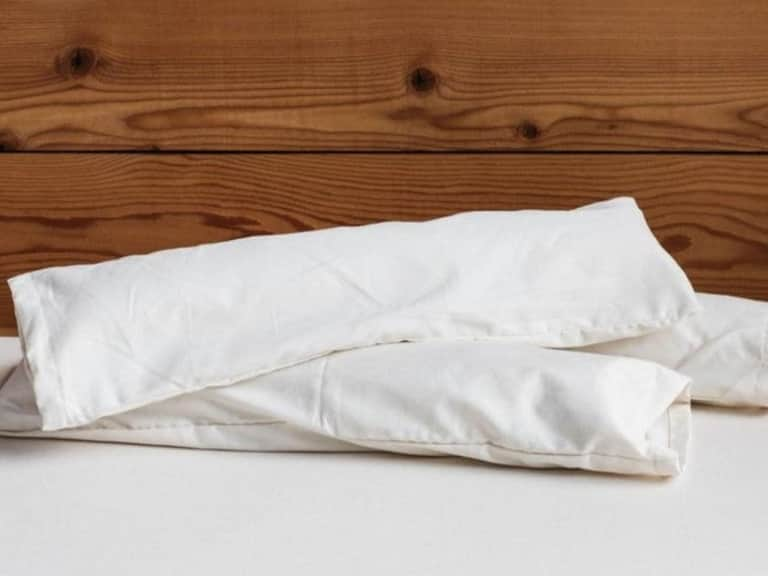
Cotton batting is a web of cotton fibers processed into a soft, relatively cohesive layer or mass. In a bolster, cotton can lend a grounded, substantial feel. Depending on how it is layered and packed, the cushion may compress under body weight while still offering a reassuring base. It often feels less springy than a foam-filled prop and may have a more natural, textile-like character.
That sense of substance can be useful when a posture calls for a steady platform. The bolster should support rather than swallow the body, and cotton batting can help give a cushion a composed shape. But “cotton-filled” does not specify one exact firmness. A tightly packed bolster may feel quite firm, while a loosely filled one may yield more readily. Dimensions, stitching, the shape of the inner casing, and the amount of filling all contribute to the finished feel.
Cotton is also a material with a familiar presence in household textiles, but familiarity should not be mistaken for a guarantee about sourcing or processing. If organic content or production standards matter to you, read the product details and look for clear, specific information. Terms such as “natural” do not, by themselves, explain how a fiber was grown, processed, or certified.
Kapok: lightness with a buoyant character
Kapok is a silky plant fiber harvested from the seed pods of the kapok tree. It is notably light, and in cushion fillings it can contribute a soft, airy, springy quality. In a bolster, kapok may help balance the denser feel of cotton batting, giving the overall cushion a little more loft and resilience. The precise effect depends on how much kapok is used and how the filling is constructed.
That lighter quality can make a bolster feel inviting when it is first placed beneath the body. It does not mean every kapok-filled cushion will be soft or that every cotton-and-kapok blend will have the same firmness. Construction is decisive. A well-filled bolster may hold a useful shape, while one with a different fill ratio or casing may compress more quickly. Product descriptions are a starting point; where possible, assess the dimensions and the maker’s guidance about intended firmness and use.
Kapok and cotton batting are not interchangeable names for one generic “natural fill.” Each has its own tactile character, and a blend can make the most of their differences. Cotton can contribute weight and structure; kapok can bring lift and softness. The result is a design choice rather than a promise of a specific sensation, which is why it helps to think in terms of the complete bolster rather than the filling name alone.
Why the blend matters in restorative yoga
Restorative poses are usually held for longer than a quick stretch, so a prop needs to feel dependable over time. A cotton batting and kapok bolster aims for a middle ground: supportive enough to provide a clear surface, yet comfortable enough to encourage release. In use, the filling should meet the body without creating a hard edge or a sensation of sinking too far.
Think of the material blend as part of the atmosphere of a practice. A dense, firm bolster can lend a stable, architectural quality to a pose. A lighter, more yielding one may feel softer and more enveloping. Neither is inherently better. The useful question is whether the bolster places the body at a comfortable height and maintains that support for the duration of the posture.
It is worth distinguishing comfort from therapeutic claims. A bolster may make a position more comfortable for a particular person, but it is not a treatment for pain or a substitute for medical care. Nor does a natural filling automatically make a prop hypoallergenic or suitable for everyone. Fiber sensitivities, dust, moisture, and care practices all have a bearing on how a textile product feels in real life.
Shape, size, and firmness: the practical edit
Before choosing a foam-free bolster, picture the ways you expect to use it. A longer bolster can support more of the torso in a reclined position; a compact one may be easier to store and reposition. Width affects how much of the body it can comfortably cradle, while height changes the degree of lift. There is no universal measurement that suits every pose or body.
- Length: Consider whether you want support along much of the spine or a smaller prop for knees, hips, or seated work.
- Width: A broader surface can feel more stable beneath the torso, while a narrower one may be easier to position precisely.
- Height: Height determines how much elevation a pose receives. A thick bolster may be too high for some bodies or positions.
- Firmness: A steady surface is helpful when you want the body to remain supported, but excessive firmness can create pressure.
- Weight: A heavier cushion may stay in place; a lighter one may be easier to carry between rooms or move during practice.
When trying a bolster, use it in a simple position first. Lie back with the cushion beneath the spine or place it under bent knees, then notice whether your breathing feels unforced and whether your body can settle without bracing. Check for pressure at the neck, lower back, ribs, or knees. You should be able to adjust the arrangement easily. A bolster is an aid to comfort, not a test of flexibility.
Cover construction and everyday care
The outer cover is more than a finishing detail. It shapes the feel against skin, protects the filling from everyday contact, and determines how straightforward the bolster is to clean. A durable fabric with secure stitching can be useful when a prop is handled frequently. A removable cover makes routine care more convenient, particularly in a shared home or studio setting.
Check whether the cover is actually removable and whether it is washable. “Easy care” can mean different things across products; follow the maker’s instructions rather than assuming the entire bolster can go into a washing machine. The inner filling may need spot cleaning only, while a removable cover may have a separate washing and drying method. High heat, harsh detergents, or prolonged dampness can affect fabric, seams, or filling.
For a bolster with a removable cover, take it off carefully and close any fasteners before washing, if the care label advises it. Allow the cover to dry fully before replacing it. For the cushion itself, address small marks with the method recommended by the maker and let the material air thoroughly. Avoid storing a damp bolster in a closed cupboard or bag. Regular airing and a clean practice surface can help keep a prop fresh without over-washing it.
Consider the practical rhythm of your routine. A cushion used occasionally at home may need only simple maintenance. A bolster used often or by several people benefits from a cover that can be laundered with confidence. In a shared setting, it is sensible to have clear cleaning procedures and to inspect seams, closures, and fabric periodically for wear.
A foam-free bolster: what the label can and cannot tell you
“Foam-free” describes what a bolster does not contain, but it does not, on its own, establish the quality of its filling, the durability of its construction, or its environmental credentials. Look for a transparent materials list that identifies the filling and cover separately. If a product combines cotton batting and kapok, the description should say so clearly rather than relying on broad language such as “eco” or “natural.”
Certifications can provide useful information when they apply to the material or manufacturing stage that interests you. Read what a certification covers and which component it refers to; a certified fabric does not necessarily mean every part of the finished product has the same status. Where claims about sourcing or processing are important, look for details rather than assuming a label means more than it states.
Construction also merits attention. A bolster’s seams should look secure, the cover should fit without twisting, and any zipper or closure should be positioned so it is unlikely to press against the body. If the fill is adjustable, find out how it is accessed and whether the maker provides instructions for changing it. Adjustable filling can be useful, but it is not a feature every practitioner needs.
Simple ways to use a bolster at home
A few uncomplicated arrangements can help you understand the feel of a bolster before building a longer routine. Move slowly, keep a folded blanket nearby for small adjustments, and leave enough room to exit each posture comfortably.
- Supported recline: Place the bolster lengthwise behind you and settle back so the head and neck remain comfortably supported, using a folded blanket if additional height is needed.
- Rest beneath the knees: Lie on your back with the bolster under gently bent knees. Adjust the distance until the position feels relaxed rather than forced.
- Seated elevation: Sit near the front edge of the bolster to raise the hips. If the position makes the knees or back uncomfortable, change the height or choose a different seat.
- Supported forward rest: Place the bolster in front of you and lower the torso toward it only as far as feels easy. Add blankets to support the head or arms where helpful.
These are starting points, not a sequence that everyone should follow. A prop should make a pose more accessible, and it is perfectly reasonable to change the setup, use a different cushion, or skip a posture. Stillness can be built from comfort; it need not be earned through endurance.
Choosing a bolster that suits your practice
When comparing options, bring the decision back to use. If you want a firm, stable support for longer holds, prioritize a shape and fill that maintain their form under weight. If you prefer a softer, more buoyant feel, a cotton-and-kapok blend may be worth considering, while remembering that the ratio and packing determine the result. If portability matters, check the bolster’s weight and dimensions. If maintenance is the priority, start with the cover and care label.
A thoughtful choice is less about chasing an idealized material and more about matching construction to the way you move. Cotton batting can add a grounded sense of structure; kapok can lend lightness and loft. Together, they can create a foam-free bolster with a distinct tactile character, but the finished support will always depend on the full design.
In the end, a good yoga bolster is not a statement piece or a shortcut to a pose. It is a quiet, practical companion: firm enough to be useful, comfortable enough to invite a pause, and simple enough to make restorative practice feel more approachable. Choose one with clear materials, dimensions that suit your needs, a cover you can care for, and a feel that helps your body settle. That is where support becomes something more than an accessory—it becomes part of the practice itself.