The considered home · Bath linens
Coyuchi Bath Towels: How to Compare Cotton, Weight, and Everyday Care
A good bath towel is a small daily luxury, but the best choice is about more than a plush first impression. Cotton, weave, weight, absorbency and wash habits all shape how a towel feels over time—and whether it suits the rhythm of your bathroom.
There is a particular pleasure in stepping out of a shower and reaching for a towel that feels considered: soft without being heavy, absorbent without taking an age to dry, and substantial enough to feel like a lasting part of the linen cupboard. Yet the language around towels can make comparison surprisingly difficult. Cotton varieties, weave descriptions and GSM figures appear beside promises of softness and performance, while the details that matter most in daily use are often tucked into care instructions.
When comparing Coyuchi bath towels, begin with the practical questions. Do you prefer a light, quick-drying towel or a denser, more enveloping one? How much room does your bathroom have for drying? Will the towel be used once a day, shared by a household, or packed for travel? And are you prepared to follow a gentle washing routine to preserve its feel?
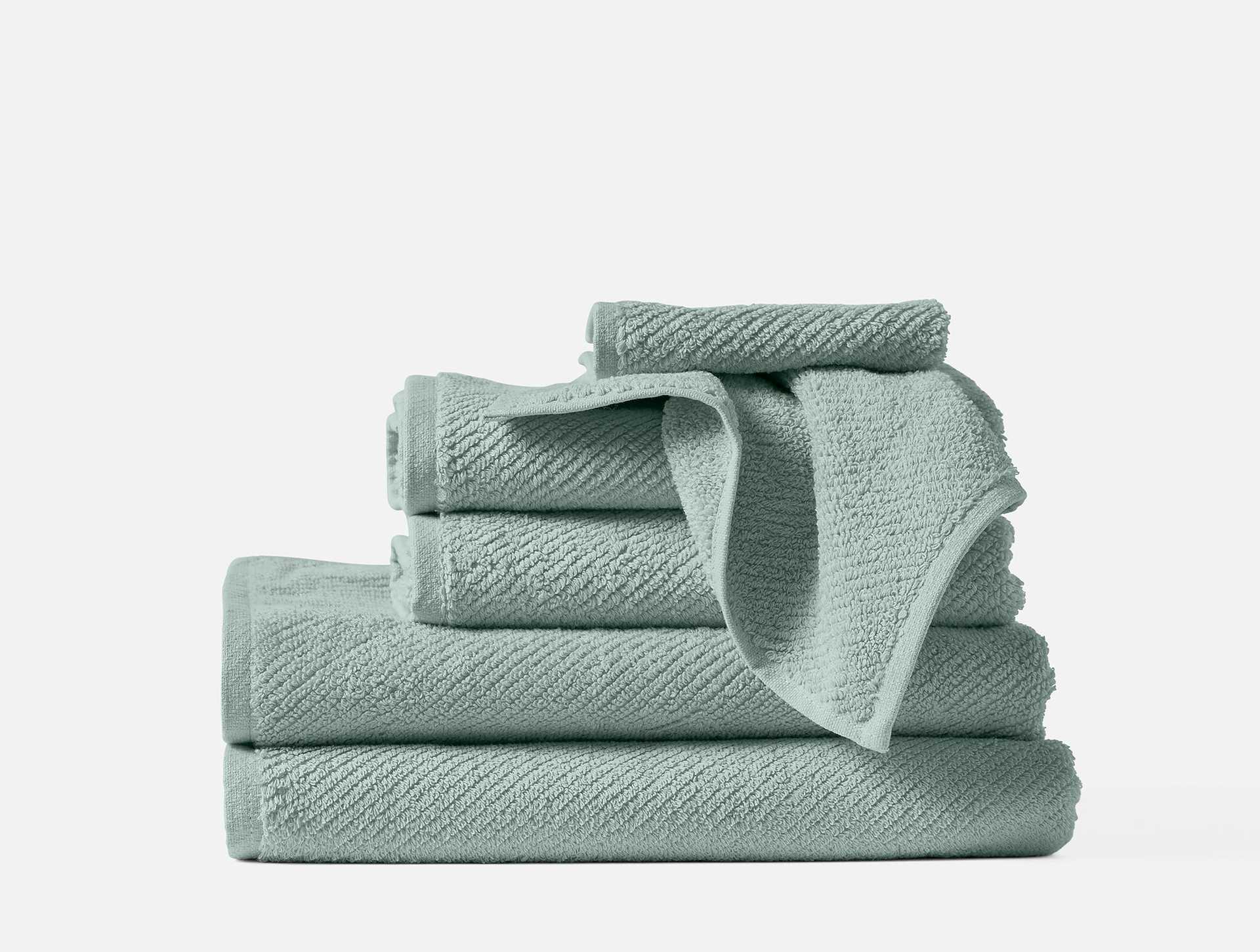
One useful example is Coyuchi’s Air Weight® Organic Towels. The listed construction is 100% organic cotton with long loops and a twill weave, at 550 GSM. The product information describes the fabric as dense and absorbent while also designed for efficient drying. Its published care instructions call for a cold, gentle wash with like colours and low-temperature tumble drying. Those particulars offer a useful starting point for understanding what a towel specification can—and cannot—tell you.
Cotton is the beginning, not the whole story
Cotton is valued in towels because it can absorb water and feels comfortable against the skin. But “cotton” alone does not predict the exact hand, absorbency or lifespan of a towel. Fibre characteristics, yarn, loop construction, weave, finishing and care all contribute. Two towels made from cotton can feel noticeably different: one may be airy and textured, another smooth and dense, and a third plush enough to feel almost blanket-like.
Long loops are a visible feature of many terry towels. The loops increase the surface area of the fabric and help create the familiar soft, absorbent pile. A towel’s loop length, density and yarn structure can influence its feel, but there is no single construction that suits every bathroom or preference. Long loops may feel invitingly cushioned; a more compact texture can feel less voluminous and may be easier to handle for someone who prefers a lighter linen.
Organic cotton is another meaningful detail for shoppers who care about how fibre is grown and processed. It is important, though, to read certification information rather than treating the word “organic” as a complete description of every part of a product’s supply chain. For the Air Weight® towels, the product details specify 100% organic cotton and list GOTS and Fair Trade certifications. A certification can provide a defined framework for particular production or sourcing criteria; the scope depends on the standard and its requirements. It does not, by itself, tell you whether the towel will feel thick, dry quickly in your bathroom, or suit your preferred texture.
For a well-informed comparison, look for a full materials description, details about construction and any relevant certifications. Then consider how those details meet your own priorities. If you are choosing towels for a shared family bathroom, durability and uncomplicated washing may be paramount. For a guest bath used less frequently, you may place greater weight on a luxurious feel. Neither preference is more correct; the best textile is the one that performs well in the life you actually lead.
What towel weight means
Bath towel weight is commonly expressed in GSM: grams per square metre. It describes the mass of a square metre of fabric, giving a general indication of density. As a broad guide, a lower GSM towel often feels lighter and less bulky, while a higher GSM towel may feel thicker and more substantial. It is a useful comparison point, not a definitive measure of softness, absorbency or quality.
That distinction matters. A high GSM figure can suggest a weightier towel, but the actual experience depends on more than the number. Fibre quality, yarn, weave, finishing and the towel’s dimensions all contribute. A dense towel may offer a cocooning feel, yet it can take longer to dry depending on ventilation, humidity, how it is hung and the way it is laundered. A lighter towel may be easier to store and dry, though someone seeking a deeply plush finish might prefer more heft.
At 550 GSM, the Air Weight® Organic Towels sit in a range that can feel substantial while remaining designed with efficient drying in mind. The product description attributes that balance to long-loop organic cotton and a twill weave. Treat the stated weight as a helpful specification rather than a promise of identical results in every home: bathroom airflow, the amount of space between towels on a rail and local humidity make a real difference.
When comparing two towels, check whether the GSM figures are presented consistently and consider the complete construction. A number without context is less useful than a number paired with clear information about material and weave. If you can handle a towel in person, pay attention to how it drapes and folds, whether the pile feels springy or compact, and whether its weight seems comfortable when wet. If shopping online, product specifications and care guidance are the most reliable clues available.
Weave, absorbency and the pace of drying
Weave shapes a towel’s surface and structure. Terry cloth, with its looped pile, is a familiar choice for bath towels because the loops create a soft, textured face and a generous surface area. A twill weave, by contrast, is identified by its diagonal structure. In a towel, weave and pile can work together to give the fabric a distinctive texture and density. The particular result depends on the way the fabric is made, so a weave name is best read alongside the product description rather than as a guarantee of a specific sensation.
Absorbency is equally nuanced. Cotton’s capacity to take up moisture is one reason it is widely used for bath linens, but a towel may not perform at its best straight from the shelf. Finishes, detergent residue, fabric softener and laundering habits can influence how water moves through the fibres. Some towels become more absorbent with use and washing, though results vary by construction and care. Resist judging a new towel on one first use alone.
Drying time is a practical counterpart to absorbency. A towel that absorbs readily but stays damp for hours may not be ideal in a small, humid bathroom. Hang towels fully opened rather than folded over themselves, and leave space for air to circulate. If a towel repeatedly smells musty, it may need more opportunity to dry between uses or a prompt wash. This is not simply a matter of weight: room ventilation, hanging style and household habits all shape the outcome.
Think of choosing a towel as a balance rather than a contest for maximum plushness. If you shower frequently and launder often, a towel with clear care instructions and a drying routine that suits your space may be more satisfying than the thickest option available. If you have a well-ventilated bathroom and enjoy a fuller, softer feel, you may be comfortable choosing a denser construction.
A simple checklist for comparing Coyuchi bath towels
Before deciding, compare each towel on the same terms. Product descriptions can be evocative, but a short checklist keeps the decision grounded in useful details:
- Material: Check the stated fibre content and whether the description identifies organic cotton or other materials.
- Certifications: Note which standards are listed and what they cover, rather than assuming all certifications mean the same thing.
- Weight: Use GSM to estimate density and compare like with like, while remembering it is not a standalone quality rating.
- Construction: Look for information about loops, pile, weave and texture. These details help explain the intended feel.
- Care: Confirm wash temperature, cycle, drying method and any instructions about colour or ironing.
- Use: Consider your bathroom’s drying conditions, storage space, household size and preferred degree of plushness.
For the Air Weight® Organic Towels, the available product details list 100% organic cotton, a 550 GSM weight, long loops, twill weave, and GOTS and Fair Trade certifications. The cotton is described as grown and woven in India. The specified care routine is cold washing on a gentle cycle with like colours, followed by low-temperature tumble drying and prompt removal. These details make it easier to assess the towel against your own routine without relying on vague comparisons alone.
Everyday care that helps preserve texture
Care is part of the buying decision because repeated washing affects how cotton towels feel and behave. A straightforward routine is usually best: follow the label, avoid overcrowding the washer and dryer, and let the fabric move freely. For the Air Weight® towels, the listed guidance is to machine wash cold on a gentle cycle with like colours, tumble dry on low and remove promptly. A warm iron is optional. Always give the product’s own label priority if it offers more specific instructions.
Washing new towels before use is a common way to remove loose fibres and prepare them for everyday handling. Use a detergent suited to the colour and the fabric, and measure it according to the product directions and the size of the load. Too much detergent can leave residue, which may make textiles feel less fresh or affect how readily they take up water. Fabric softener can also leave a coating on absorbent fibres, so consider using it sparingly or not at all if maintaining absorbency is a priority.
Keep colours together where possible, especially when towels are new or deeply coloured. Avoid filling the washing machine so tightly that the towels cannot circulate. A balanced load helps water and detergent move through the fabric, while an overpacked dryer can prolong drying and leave linens unevenly finished. Low heat is a gentle default when recommended; taking towels out promptly helps reduce unnecessary creasing and leaves them ready to fold or hang.
There is no need to overcomplicate towel maintenance. Wash according to use and household preference, allow towels to dry thoroughly between uses, and address spills or stains promptly with care appropriate to the fabric. Avoid harsh treatment unless the care label allows it. For a product with a specified gentle-cycle routine, a more aggressive wash is unlikely to be a useful shortcut.
How to make a towel last in a real bathroom
Longevity begins after the shower. Spread a towel out on a rail or bar so as much of the fabric as possible is exposed to air. A hook is convenient, but a tightly bunched towel can dry unevenly. If several people share a bathroom, make sure there is enough hanging room for each towel to dry rather than layering damp fabric together. Small adjustments to airflow can make a noticeable difference to freshness.
Rotate towels instead of using the same one continuously. A modest rotation gives each towel more time to dry and helps distribute wear across a set. Fold or store clean towels only when they are fully dry, and keep them in a place with reasonable ventilation. In a compact bathroom, consider whether the towel’s size and thickness suit the available rails and shelves as well as your preferences at the sink or shower.
Normal use can change the texture of cotton over time. Fibres may settle, loops can look less new, and laundering can gradually soften or alter the surface. This is part of a towel’s working life, not necessarily a sign that it has failed. Gentle washing, restrained detergent use and careful drying help avoid unnecessary wear, while regular inspection can tell you when a towel is ready to be retired from daily bathing and used elsewhere in the home.
Care claims should remain proportionate: no material or certification can guarantee that a towel will never fade, snag or wear. A well-made textile still responds to water, friction, detergent and heat. The most dependable strategy is to choose construction that suits your habits, follow its care instructions and avoid treating every towel as if it needs the same routine.
The right towel is the one that fits your routine
For some, the ideal bath towel is a plush, generous wrap that turns an ordinary morning into a softer landing. For others, it is a less bulky linen that dries efficiently and slips easily into a cupboard. Neither choice is inherently superior. The right one balances hand feel and absorbency with the realities of storage, laundering and bathroom ventilation.
When you compare Coyuchi bath towels, look beyond the first impression. Cotton content describes the fibre; weave and loops help explain the construction; GSM gives a useful indication of fabric weight; care instructions show what ongoing maintenance asks of you. Certifications and origin information can add context about sourcing and production, but they should be considered alongside the qualities you will notice every day.
The Air Weight® Organic Towels illustrate why the details matter: long-loop organic cotton, a twill weave, a stated 550 GSM weight and a gentle, low-heat care routine tell a fuller story than the word “soft” ever could. Use that same practical lens with any towel you are considering. A little attention to construction and care turns a routine purchase into a more thoughtful one—and helps make the everyday ritual of drying off feel just right.